
Washington County Probate Records Overview
North Carolina does not use a separate county probate court for Washington County. Probate runs through the Clerk of Superior Court. The clerk acts as Ex Officio Judge of Probate, which means the clerk has judicial authority over many estate administration tasks. The clerk can open estates, qualify or appoint a personal representative, issue letters, accept inventories and accounts, and hold many estate hearings. Assistant clerks may handle many proceedings under the same office structure.
Estate administration is the process of collecting probate assets, paying valid debts, and distributing property after death. The North Carolina estates guidance explains the statewide framework for probate assets, small estates, personal representatives, and estate filings. A will contest, called a caveat in North Carolina, can move the dispute before a Superior Court judge. That distinction matters because routine estate administration may stay with the clerk, while a contested will can become Superior Court litigation.
The official estates help topic is a source for the clerk's probate role and estate administration process.
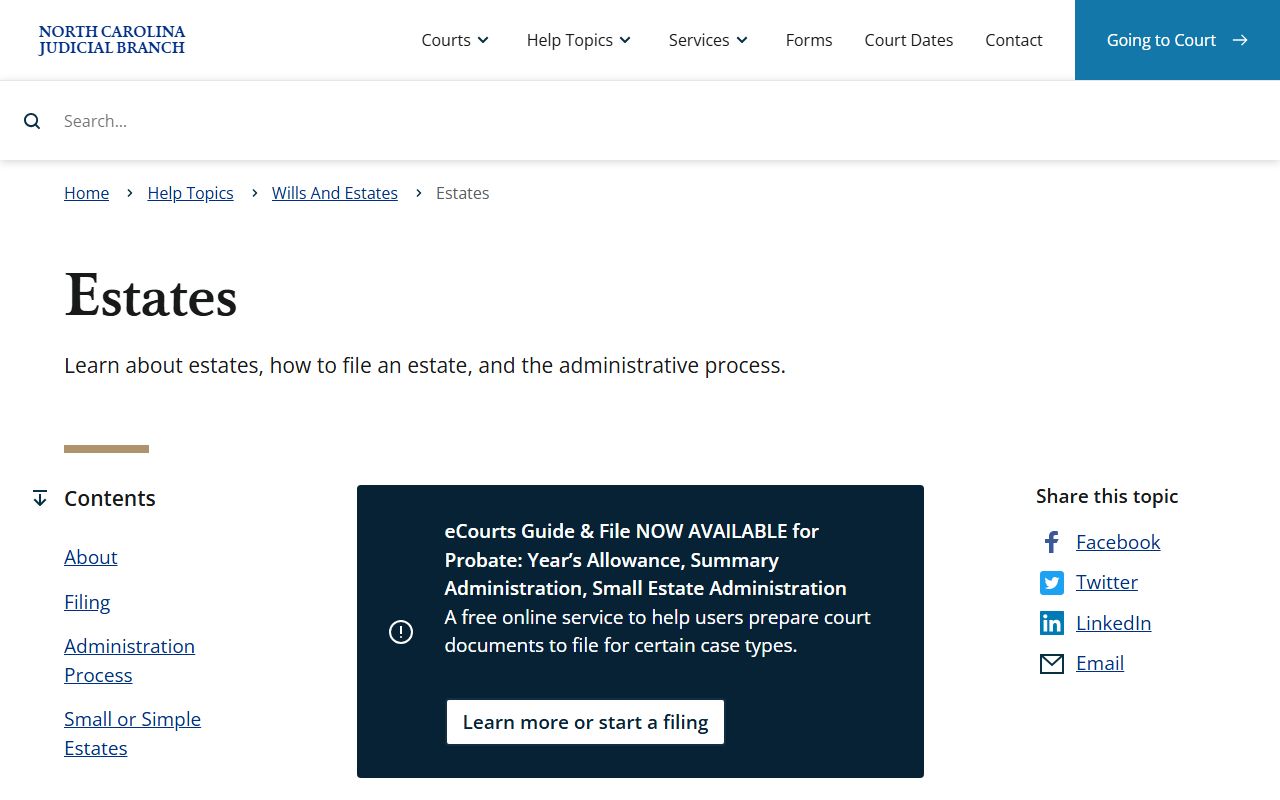
The estates image supports the local explanation that Washington County probate records are court records handled through the clerk's estate function.
Washington County Probate Terms
Probate records use terms that are easy to confuse with ordinary civil-case language. These definitions are tailored to the Washington County estate and special-proceeding context shown in the research file.
- Testator
- A person who made a will.
- Executor
- A personal representative named in a will to carry out estate administration.
- Administrator
- A personal representative appointed when there is no will or no executor can serve.
- Intestate
- Dying without a valid will.
- Guardianship
- A special proceeding that may involve a person who cannot manage personal or financial affairs.
- Caveat
- A North Carolina challenge to the validity of a will.
Search Washington County Probate Records
Start with the NC eCourts Portal Smart Search for nonconfidential estates and special proceedings. Use Washington County as the location when the estate is local, and narrow by case type, case status, and filing-date range when those filters are available. Portal training says Smart Search can include Civil Actions, Special Proceedings, Estates, and Criminal Actions under the clerk recordkeeping statute. If an estate is older, incomplete online, or needs a certified copy, contact the clerk's office in Plymouth.
- Search the NC eCourts Portal by name or record number.
- Set the location filter to Washington County instead of All Locations.
- Use estate, special proceeding, status, and filing-date filters when available.
- Open the public case summary or register of actions if the result is viewable.
- Contact the Clerk of Superior Court for paper files, older estates, certified copies, or filing questions.
The Register of Deeds land index may matter when an estate involves real property, but it is not the probate file. Deeds, deeds of trust, powers of attorney, and land records go through the Register of Deeds. Estate administration, will probate, personal representative qualification, and clerk probate orders go through the Clerk of Superior Court.
When a search result is unclear, ask whether the matter is an estate file or a special proceeding. Estate files usually focus on a decedent's property, debts, notices, representative authority, and accounting. Special proceedings can include guardianship, incompetency, partition, or other matters assigned to the clerk. The same clerk office may hold both types, but the public-access rules and search terms can differ. A name search may find a personal representative, petitioner, respondent, or decedent, so case type and filing date can be just as important as the name.
Washington County Probate Contact
There is one local probate venue for Washington County: the Clerk of Superior Court acting as Ex Officio Judge of Probate. The office is in the Washington County Courthouse. The research file identifies the clerk's first-floor offices, court records role, probate role, mailing address, phone, fax, email, and hours.
The courthouse is also the local place for related court payments, public terminals, and paper-file review. Parking can be limited on court days, and official guidance allows DSS lot parking and street parking where permitted. Wheelchair access is listed as a courthouse facility, but county capital-planning materials discuss elevator issues as an ADA concern, so anyone who needs upper-floor access should confirm arrangements before visiting.
Clerk of Superior Court acting as Ex Officio Judge of Probate
Clerk: Brian Phelps
Washington County Courthouse
120 Adams Street
PO Box 901
Plymouth, NC 27962
(252) 791-4000
Fax: (252) 791-4001
Email: brian.k.phelps@nccourts.org
Monday-Friday, 8:30 AM-5:00 PM
Washington County Probate Fees
The current court-cost charts are the best source for estate and special-proceeding filing fees because the research file did not extract each probate filing line. Do not rely on an old fee sheet before opening an estate. The fee amounts below are the copy-related clerk fees extracted from the statewide miscellaneous chart and the source direction for estate filing fees.
| Item | Amount or Rule | Use |
|---|---|---|
| Estate filing fees | Check current court-cost chart | Opening estate or related estate filing. |
| Special proceeding filing fees | Check current court-cost chart | Guardianship, incompetency, partition, and other special proceedings. |
| Court copy preparation | $2.00 first page, $0.25 each additional page | Plain probate or estate-file copies. |
| Certificate under seal | $3.00 | Certified estate or clerk record copy. |
| Exemplification | $10.00 | Higher certification when required by the receiving agency. |
Fee planning also depends on the task. Opening an estate, filing a special proceeding, requesting letters, ordering certified copies, and mailing records can involve different charges. The clerk can tell a requester what is due for the specific filing or copy request, but the clerk cannot choose the legal form, give estate strategy, or decide who should serve as representative for a family.
The official current court-cost page is the source to check before naming an estate filing charge.
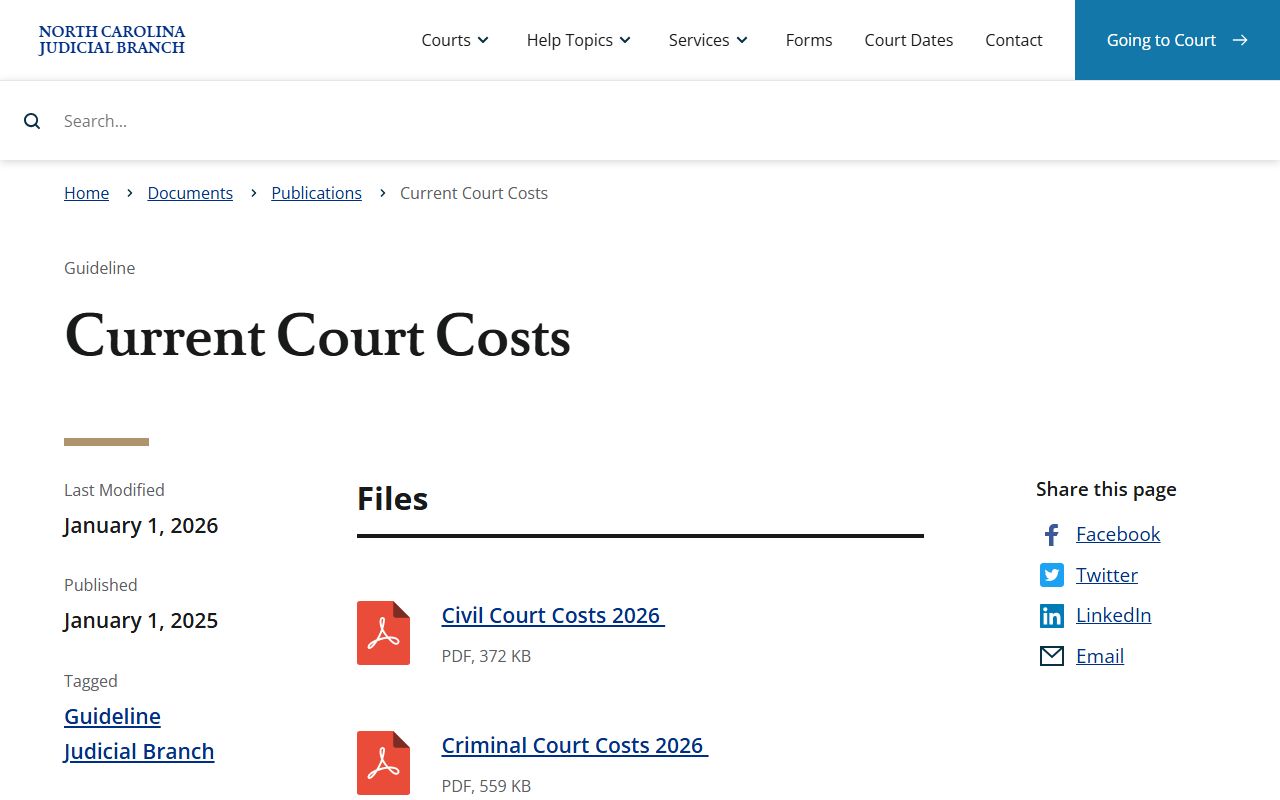
The fee-chart image reinforces that probate fees should be verified against the current statewide schedule, not guessed from a template.
What Washington County Probate Records Show
Washington County probate records may include wills filed for probate, applications for Letters Testamentary or Letters of Administration, the oath or qualification of the personal representative, inventories, annual accounts, final accounts, creditor notices, claims, receipts, releases, orders, and estate closing documents. Small-estate matters may include an affidavit for collection of personal property or summary administration papers if the estate qualifies. Guardianship and incompetency matters may appear as special proceedings, but public access can be limited.
A probate file should not be treated as a single document. It is usually a sequence of filings and clerk actions across the life of the estate. The first filing may open the estate. Later filings may show asset inventory, creditor handling, accounting, and final distribution. If a will is contested, the caveat record can add litigation filings, orders, and a Superior Court judge's role. For related land transfers, check the Register of Deeds separately.
Older estate files may need direct clerk help because not every historical file is fully digitized in Portal. That is especially important in a rural county where families may be researching property, heirs, or old probate activity tied to Plymouth, Roper, Creswell, and surrounding communities. When asking for a file, include the decedent name, approximate date of death or filing, case number if known, and whether a plain copy, certified copy, or inspection appointment is needed.
Probate research can also require checking more than one public source. The estate file may show the clerk's orders and accountings, while the Register of Deeds may show later deeds, releases, or powers of attorney tied to estate property. A judgment search may matter if a creditor claim became a court judgment. Keeping those sources separate helps avoid treating a land-index image as the full estate file.
Restricted Washington County Probate Records
Public access is broad for many court records, but it is not absolute. Guardianship, incompetency, mental-health-related materials, sealed filings, adoption records, and juvenile records can be restricted. Personal identifiers may be redacted. If an estate or special proceeding involves a minor or sensitive capacity issues, the public view may be limited even when the case category appears in a court system.
The juvenile confidentiality statute is not a probate statute, but it is relevant to record-access boundaries when a special proceeding or related file touches minor-status issues.
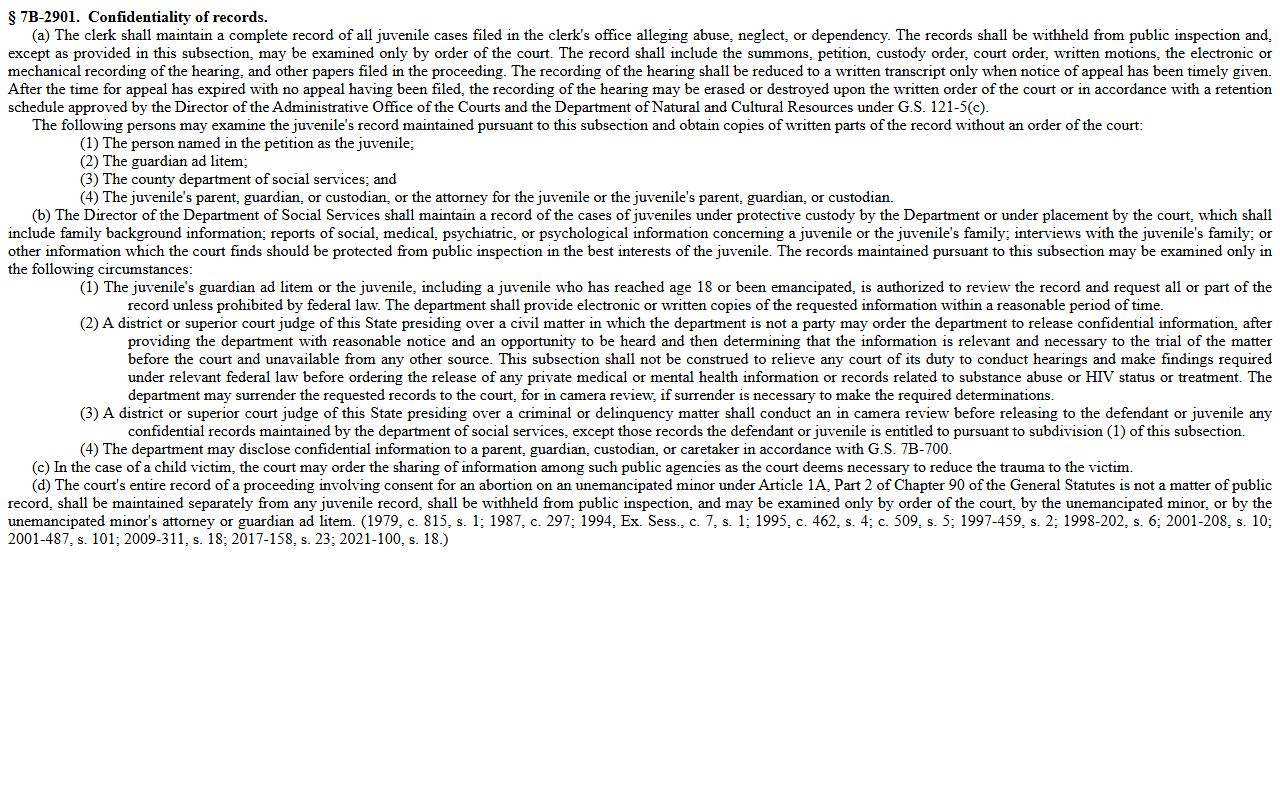
The confidentiality image supports the larger access point: not every court-related file at the courthouse is open in full to public inspection.
Note: A sealed, juvenile, adoption, or mental-health-sensitive file may not appear in the same way as an ordinary estate record.