
Washington County Arrest Records and Charges
Arrest records begin with law enforcement. In Washington County, the Sheriff's Office enforces law, investigates crimes, secures custody and control of arrested persons, serves civil and criminal process, and provides courtroom security. The sheriff's page lists the office at the Washington County Courthouse and identifies detention contact channels, but the research did not locate an official county online jail roster or searchable current-inmate database. Current custody questions should use the detention phone channel, while court charges should be checked through eCourts or the Clerk of Superior Court.
Court charges after arrest are different. Once a person is arrested or criminal process begins, the District Attorney or another proper charging authority decides what formal charge is filed and how it moves through District Court or Superior Court. The court charge record can show offense name, statute, severity, case number, bond, hearing dates, amendments, dismissals, pleas, conviction, sentence, fines, costs, and appeal entries. For the full criminal case file and outcome, use the Washington County criminal court records page.
The official Sheriff's Office page is the county source for arrest, detention, process, and patrol contact context.
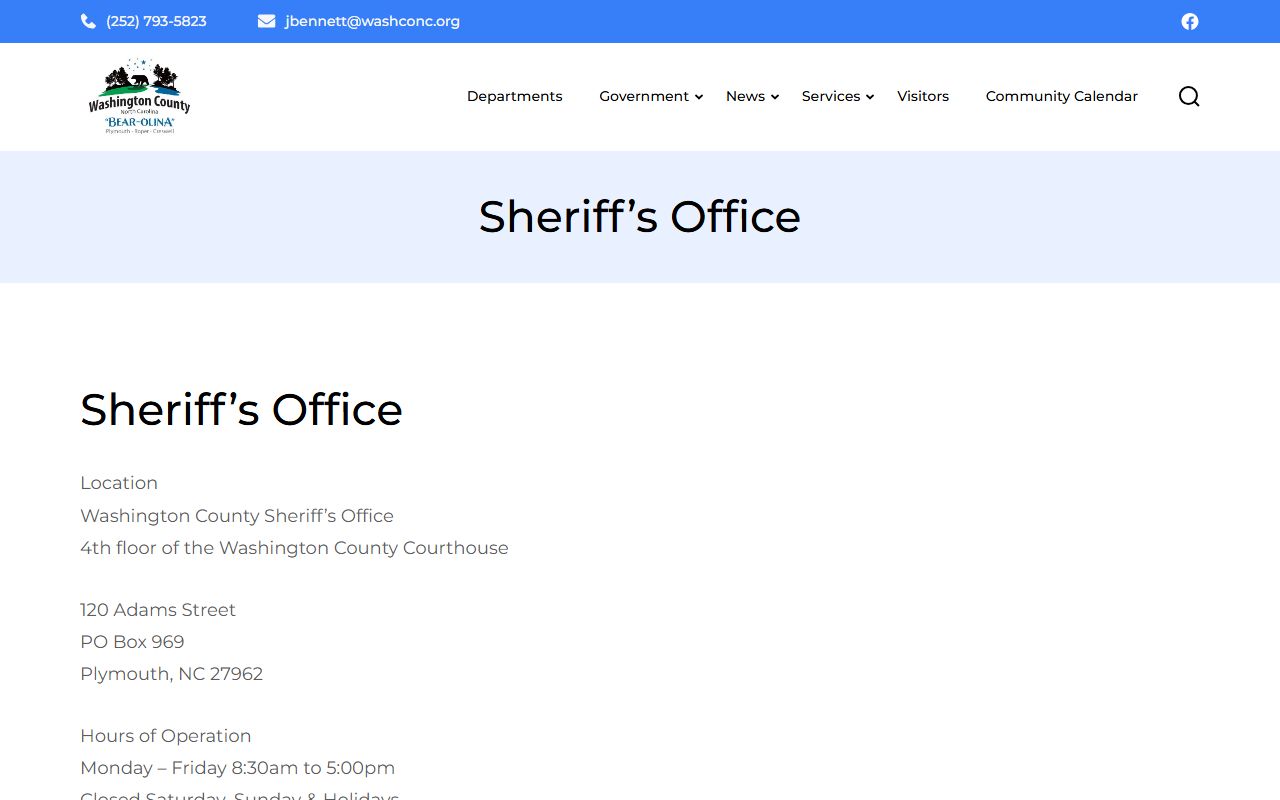
That source supports the distinction between custody records held by law enforcement and charges tracked in court.
Find Washington County Arrest Records and Charges
Use separate channels for separate records. For court charges after arrest, start with the NC eCourts Portal and Smart Search. Search by case number or defendant name, then filter Location to Washington County. For hearing dates, use Search Hearings or calendars.nccourts.org. For current local custody, call Washington County detention because no official county online roster was found in the research. For incident, arrest, and investigative records, ask the Sheriff's Office or arresting agency, with the limits of criminal investigation law in mind.
- Open Smart Search for the court charge record and search by case number or defendant name.
- Set Location to Washington County and use case type or filing-date filters when needed.
- Open the case summary and read each charge, status, hearing, disposition, and financial entry separately.
- Call detention for current custody questions because booking status and court charge status are different systems.
- Use the Clerk of Superior Court for certified copies, older case files, and charges not detailed online.
State-level offender and supervision records are not the same as an arrest record or court charge file. The NC Department of Adult Correction search covers state prisoners, probationers, parolees, and historical offender records back to 1972. VINELink / SAVAN can help with custody notifications. The NC SBI sex offender registry is separate from both court charges and jail custody.
Charges After Arrest Documents
The charge record begins when a formal accusation enters the court process. North Carolina cases can involve criminal process, complaints, informations, indictments, warrants, orders for arrest, and related documents depending on the stage and offense. The District Attorney represents the State of North Carolina in criminal proceedings, prosecutes criminal cases in District and Superior Courts, prepares the criminal trial docket, and advises local law enforcement. In criminal cases, the State is the party, not the victim personally.
| Document | Who Uses It | What It Does |
|---|---|---|
| Complaint or Criminal Process | Law enforcement, magistrate, or prosecutor path depending on the case | Starts or supports the accusation and may connect the arrest facts to the first court event. |
| Information | Prosecutor | States formal charges filed by the prosecution where allowed by law and procedure. |
| Indictment | Grand jury and prosecutor | Formal felony accusation that often moves a case into Superior Court for plea, trial, or disposition. |
One arrest can produce more than one charge. A single case can also include amended or reduced charges, dismissed charges, and convictions on different counts. Read the charging document with the event history and disposition rather than treating the first accusation as the final result.
Washington County Charge Status Table
Charge status changes as the case moves. A charge can be pending at first appearance, changed by the prosecutor, dismissed before trial, resolved by plea, tried to verdict, or affected by later expunction. Court records may also show bond conditions, continuances, motions, and financial obligations before final disposition. Status words should be read in context because the same case can contain several charges with different outcomes.
| Status | What It Means |
|---|---|
| Pending | The charge has been filed and remains unresolved in the court record. |
| Amended | The charge language, level, or count has changed through the court process. |
| Reduced | The prosecution or court process resulted in a lower charge than the original accusation. |
| Dismissed | The charge ended without a conviction on that item. |
| Nolle Prosequi | The prosecution declined to continue that charge, subject to the legal effect of the entry. |
| Convicted | A guilty plea, verdict, or finding established guilt or responsibility on that charge. |
Charge vs Conviction Comparison
A charge is not a conviction. This is the most important distinction in Washington County arrest records and court charge records. Arrest means a person was taken into custody or processed by law enforcement. A charge means a formal accusation was filed in court. A conviction means a court result established guilt or responsibility. Public records can show all three at different times, but they do not mean the same thing.
| Issue | Charge | Conviction |
|---|---|---|
| Legal Meaning | Formal accusation. | Finding or plea establishing guilt or responsibility. |
| When It Appears | Early after arrest, warrant, citation, or charging document. | After plea, verdict, or other final court finding. |
| Can Change | Yes, it can be amended, reduced, added, or dismissed. | It may later be appealed, corrected, sealed, or expunged if eligible. |
| Where to Check | Smart Search, Clerk of Superior Court, charging document. | Disposition, sentence, judgment, and post-judgment entries. |
Washington County Arrest Records Channels
Each agency channel answers a different question. The Sheriff's Office can address local arrest, detention, service of process, courtroom security, and incident-record questions. The District Attorney decides and prosecutes state criminal charges in the district, but the DA is not the custodian for the public case file. The Clerk of Superior Court maintains the court record. The NC Department of Adult Correction provides state prison, probation, parole, and historical offender information. The NC SBI registry covers registered sex offender information.
The Department of Adult Correction page is the official state offender search source.
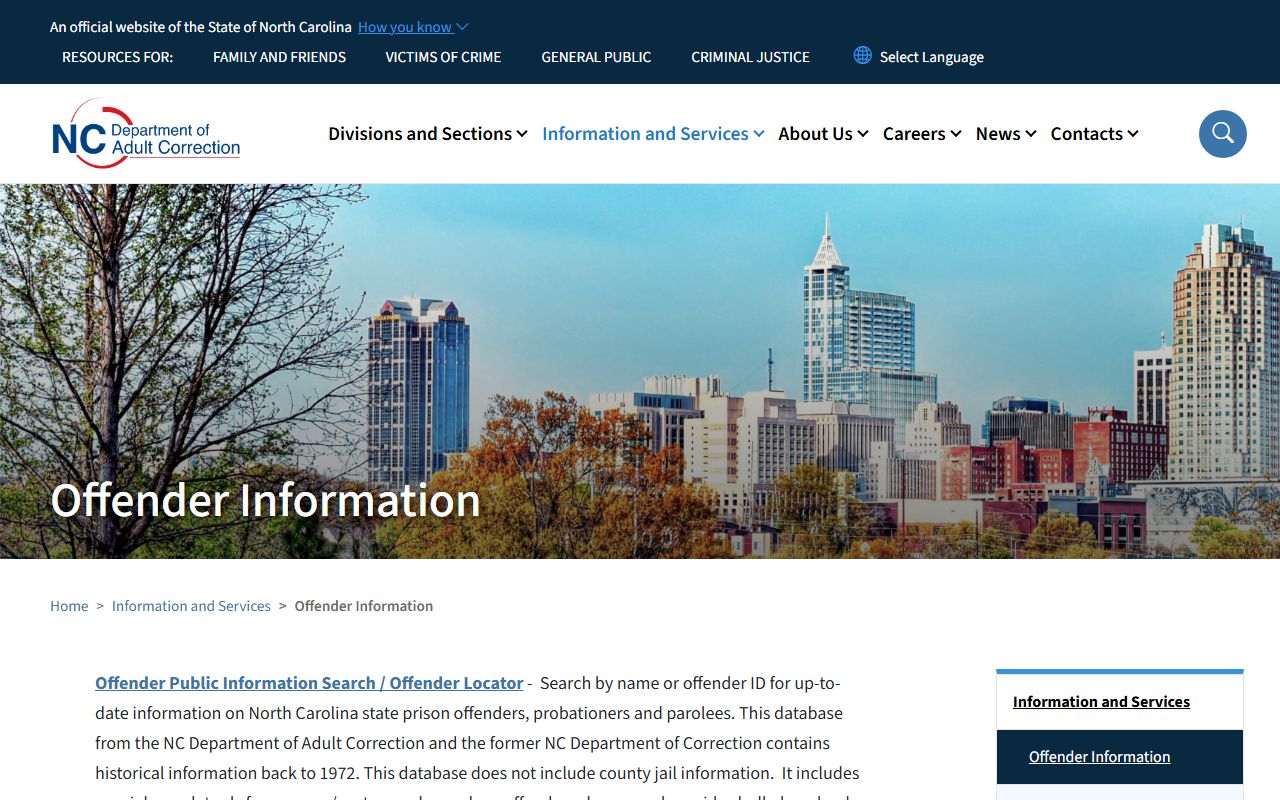
Use it for state custody or supervision records, not for a new Washington County jail booking or complete court file.
Washington County Sheriff's Office
120 Adams Street, 4th Floor
PO Box 969
Plymouth, NC 27962
(252) 793-2422
Detention: (252) 793-1107
District Attorney, District 2
111 W. 2nd St
PO Box 1705
Washington, NC 27889
(252) 940-4010
Charge Codes and Severity
Charge entries often tie an offense name to a statute, class, case type, or severity level. Misdemeanors, infractions, and traffic matters are commonly handled in District Court. Felonies may start with early District Court events and then move to Superior Court after indictment or other felony-case steps. A charge code does not by itself prove a conviction. It identifies the accusation or offense category being tracked in the case record.
Washington County court users should also separate charge status from custody status. A person can be released from custody while charges remain pending. A person can be in state custody after a conviction while the local court case is already disposed. Bond conditions, pretrial release, probation, and sentence fields should be read with the charge disposition and not as stand-alone proof of guilt.
Restricted Arrest Records and Charges
North Carolina law limits several record types. Complete criminal investigation and intelligence records held by law enforcement are restricted under G.S. 132-1.4. Law-enforcement recordings have separate rules under G.S. 132-1.4A. Juvenile delinquency and undisciplined court records are restricted under G.S. 7B-3000. Sealed and expunged records should not be described as ordinary public search results.
The law-enforcement recording statute is one official access-limit source.
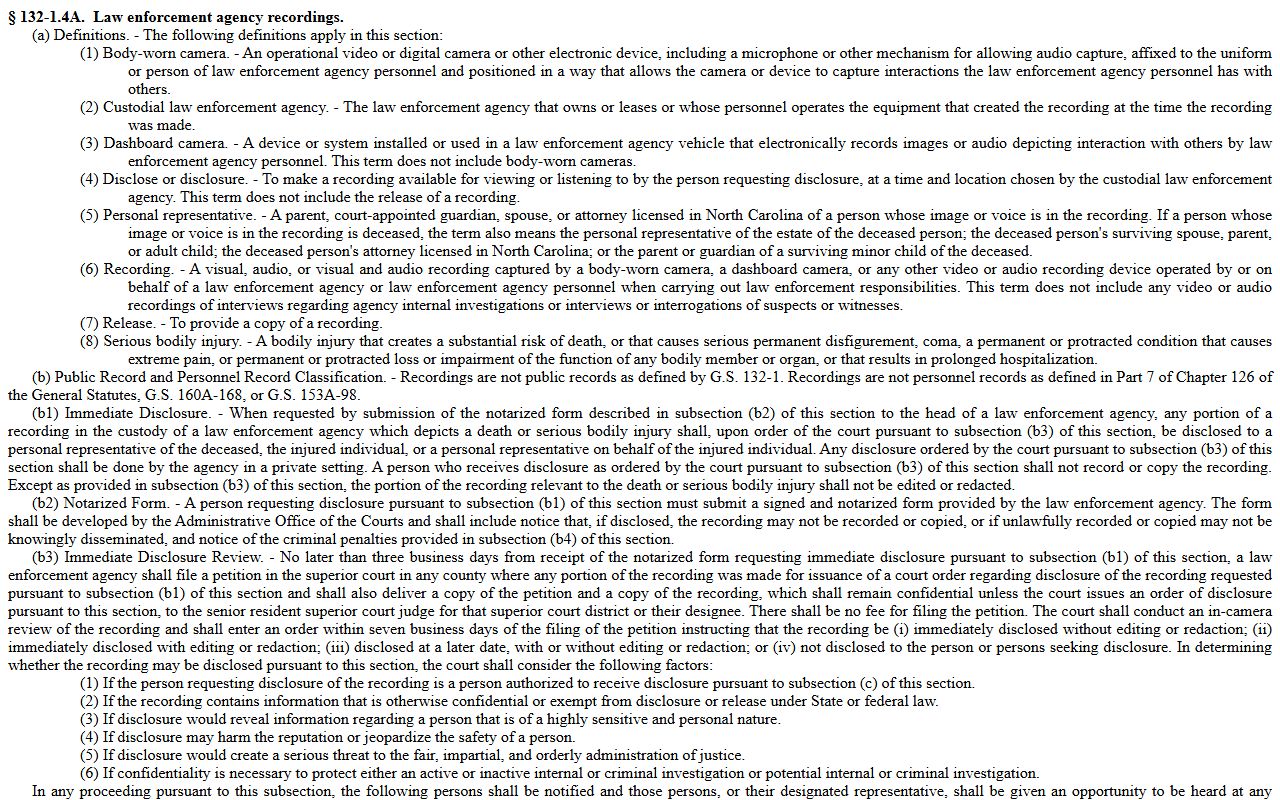
Recording requests follow their own statutory path and should not be treated like normal court charge searches.
The juvenile confidentiality statute is also assigned to Washington County arrest and charge records.
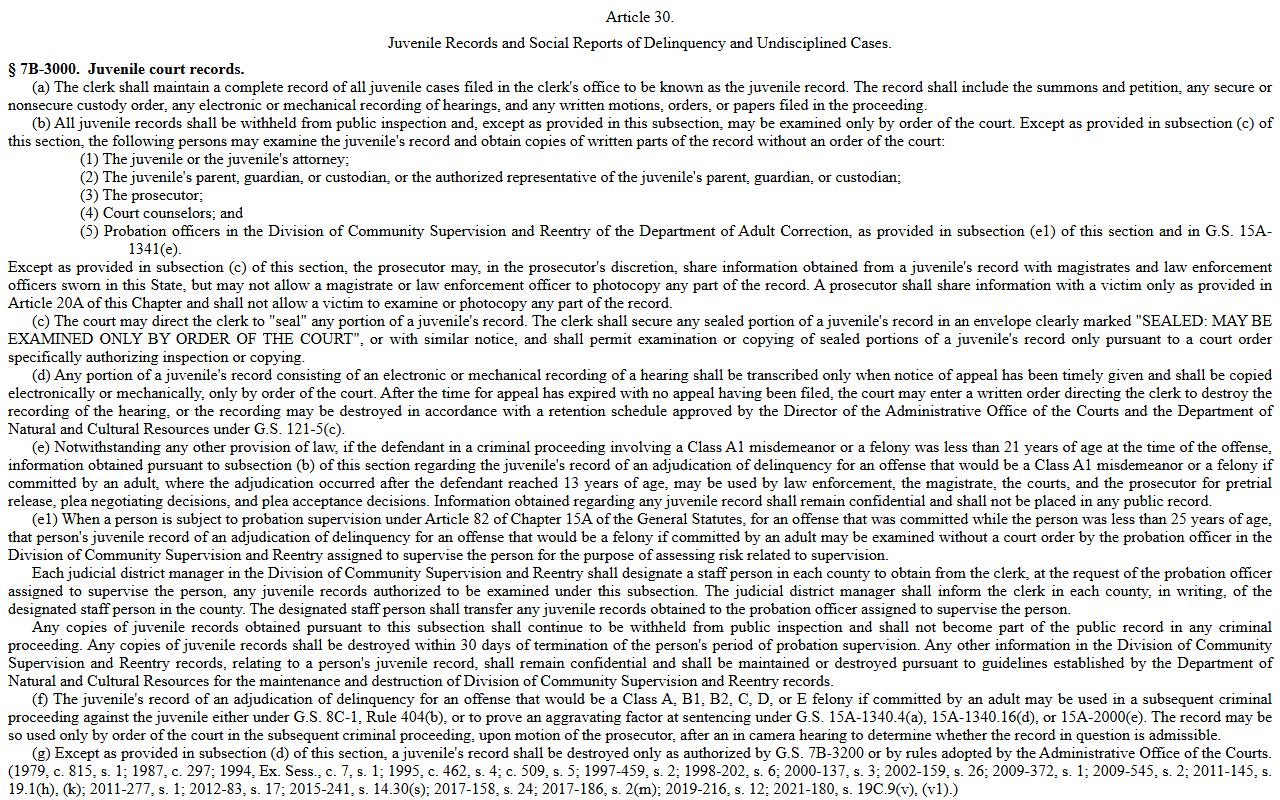
Juvenile charge material is not searched like ordinary adult arrest records or adult criminal court charges.
Sealed vs Expunged Charge Records
Sealed charge records are hidden or limited by court order, rule, or statute. Expunged charge records are removed or suppressed under an expunction order and the applicable expunction statute. Dismissed charges and not-guilty findings may have an expunction route under North Carolina law. Some nonviolent convictions may have a separate route if statutory conditions are met. A public search can change after a valid expunction order is processed by the required agencies.
| Issue | Sealed | Expunged |
|---|---|---|
| Public Access | Restricted from public view in whole or part. | Cleared from public record treatment under the order and statute. |
| Common Source | Court order, juvenile law, confidential filing, or protected data rule. | Expunction statutes for eligible dismissals, not-guilty findings, or convictions. |
| Search Result | May show limited case data or no document access. | Should not disclose expunged entries in ordinary public checks. |
| Custodian Role | Clerk and agencies follow the restriction. | Agencies listed in the order suppress or remove records as directed. |
Note: A missing online charge can reflect restriction, expunction, data limits, or a non-digitized record, not just no case.