
Washington County Criminal Court Records
A criminal court record is the court's file for a prosecution. In Washington County, the case record is maintained by the Clerk of Superior Court after charges are filed and court events begin. It can show the defendant, case number, charges, offense date, arresting agency, bond conditions, court dates, pleas, dismissals, convictions, sentence, probation, fines, costs, restitution, attorney fees, and appeal entries. It may also show the register of actions, which is the docket-style list of filings and court events.
Washington County belongs to Prosecutorial District 2, Superior Court District 2, and District Court District 2. District Court usually handles misdemeanors, infractions, traffic matters, and early felony proceedings. Superior Court usually handles felony cases, criminal jury trials, sentencing on felonies, and appeals from District Court misdemeanors and infractions for trial de novo. The court record follows that path. A felony may have initial District Court events before the Superior Court record becomes the main file for indictment, plea, trial, dismissal, or sentencing.
The official Judicial Branch news source documents the District Attorney appointment for Prosecutorial District 2.
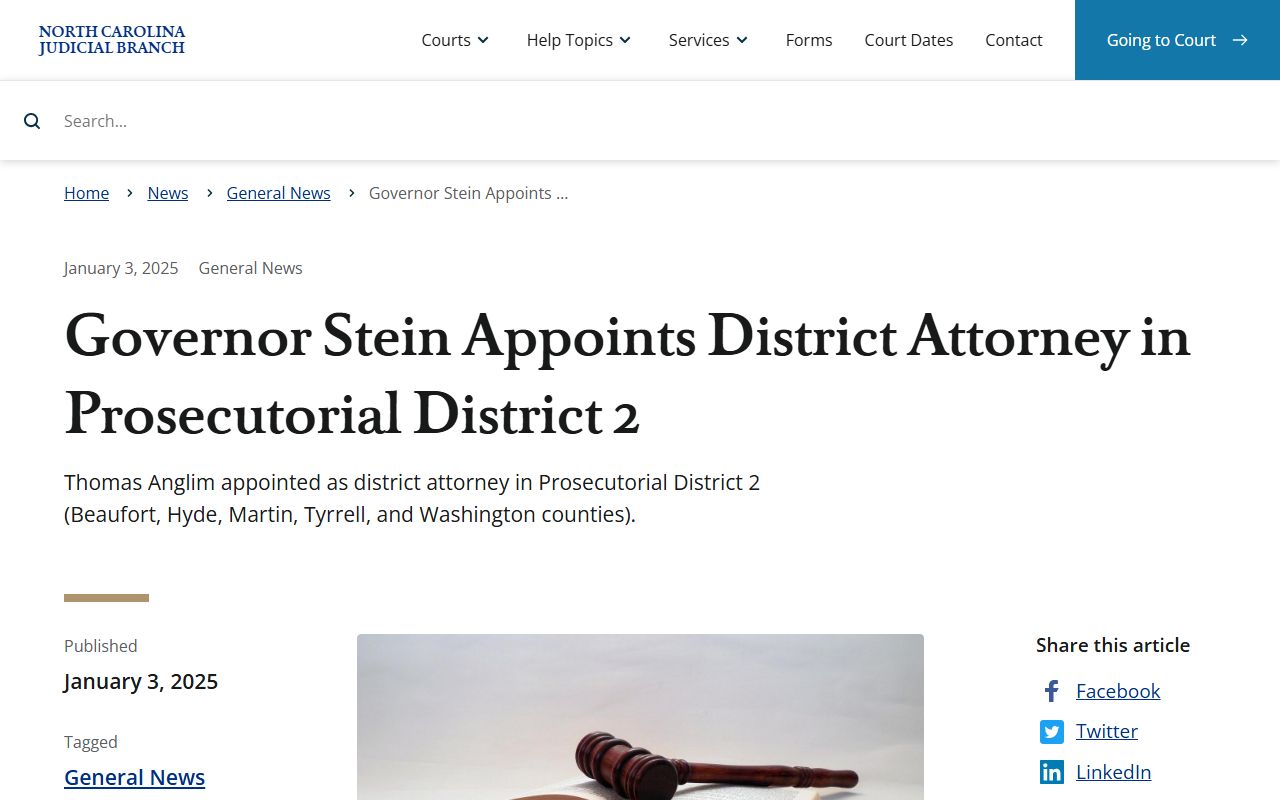
That source helps identify the prosecutor district tied to Washington County criminal cases.
Search Washington County Criminal Court Records
Start with the NC eCourts Portal and choose Smart Search for criminal case information. Search by case number when available. If the case number is unknown, search by defendant name and narrow the location to Washington County. Advanced filters can help separate criminal actions from civil, family, estate, and special proceeding records. Use calendars.nccourts.org or Search Hearings when the immediate question is a court date.
- Open Smart Search and enter the case number or defendant name.
- Filter Location to Washington County to avoid statewide name matches.
- Use case type, case status, and filing-date filters when the result set is broad.
- Open the public case summary and read the charge list, events, hearings, disposition, and financial entries.
- Contact the Clerk of Superior Court for certified copies, older paper files, or records not available online.
For statewide prison, probation, parole, and historical offender information, use the NC Department of Adult Correction offender search. That source is not the same as a Washington County criminal court file. It is useful after sentencing or supervision begins, but it does not replace the court record for charges, pleas, dispositions, or court orders.
Washington County Criminal Case Flow
Criminal court records build over time. Early entries may show criminal process, initial appearance, bond, and first appearance. Later entries may show arraignment, motions, continuances, plea negotiations, trial settings, dismissal, conviction, sentencing, probation, restitution, and appeal. A single case can have several charges, and each charge can have its own status. Read charge rows separately before drawing a conclusion.
Case flow: Charges Filed › Initial Appearance › First Appearance or Arraignment › Pretrial and Motions › Plea or Trial › Disposition › Sentencing
| Stage | What Happens |
|---|---|
| Charges Filed | The prosecutor or proper charging authority starts the court case through a charging document or criminal process. |
| Initial Appearance | A magistrate addresses release conditions after arrest under North Carolina procedure. |
| First Appearance or Arraignment | The court addresses charges, counsel, next settings, and plea-related steps depending on case type. |
| Pretrial and Motions | Parties file requests, continue hearings, exchange information, or resolve legal issues before plea or trial. |
| Plea or Trial | The case is resolved by plea, bench process, jury trial where applicable, dismissal, or other disposition. |
| Sentencing | After conviction, the record may show punishment, probation, fines, costs, restitution, or appeal entries. |
What Washington County Criminal Records Show
The public criminal court record is more than a list of charges. It is the case file that ties the prosecution to court events and outcomes. Some documents may be online, while others require clerk access. Restricted documents, juvenile matters, sealed filings, expunged records, mental health materials, and confidential identifiers are withheld or redacted. The public case summary should be treated as an index to the case, not always the full file.
| Field | What It Shows |
|---|---|
| Case Number | Year, case type letters, sequence, and county identifier in the Enterprise Justice format described by Portal training. |
| Defendant | The person charged, with party details that may be limited by public-access rules. |
| Charges | Offense names, counts, statutes, severity, and later amendments or dismissals when public. |
| Events | Filings, hearings, motions, orders, continuances, disposition entries, and appeal entries. |
| Hearing Information | Date, time, hearing type, location, courtroom, or judicial officer when available. |
| Plea | Defendant's answer to a charge, such as guilty or not guilty, when entered and public. |
| Disposition | Outcome of a charge or case, including dismissal, conviction, acquittal, or other court action. |
| Sentence and Financials | Probation, confinement, fines, costs, restitution, attorney fees, and payments where applicable. |
Charges vs Convictions
A Washington County criminal court record can show accusations that never became convictions. A charge may be pending, amended, reduced, dismissed, or resolved by plea or verdict. A conviction appears only after a guilty plea, responsible finding, verdict, or other finding that establishes guilt or responsibility. This distinction matters for background checks, employment questions, sentencing history, and personal review of a case file. For a closer look at how charges arise after arrest, use the Washington County arrest records and court charges page.
| Issue | Charge | Conviction |
|---|---|---|
| Meaning | An accusation filed in court. | A finding or plea that establishes guilt or responsibility. |
| Timing | Appears early in the case. | Appears after plea, verdict, or other final finding. |
| Record Impact | May remain public unless dismissed, sealed, expunged, or otherwise restricted. | May affect sentence, probation, costs, driver status, or later record checks. |
| Review Method | Read current charge status and events. | Read disposition, sentence, and any later expunction or appeal entries. |
Reading Criminal Dispositions
Disposition means the outcome of a charge, claim, or case. In a Washington County criminal court record, each charge should be checked for its own disposition. Dismissal means that item ended without a conviction on that charge. A guilty plea or guilty verdict may lead to sentencing entries. A not-guilty finding means the charge did not result in conviction. A continuance is only a postponed event. It is not a final outcome.
Sentencing entries may show probation, confinement, restitution, court costs, fines, attorney fees, and other obligations. Financial fields do not always explain the legal reason for the charge outcome, so read them with the disposition and sentence. For traffic or infraction matters, payment may create a responsibility or conviction entry and should be reviewed with license and insurance consequences in mind.
The Governor's release also documents the District Attorney appointment and background for Prosecutorial District 2.
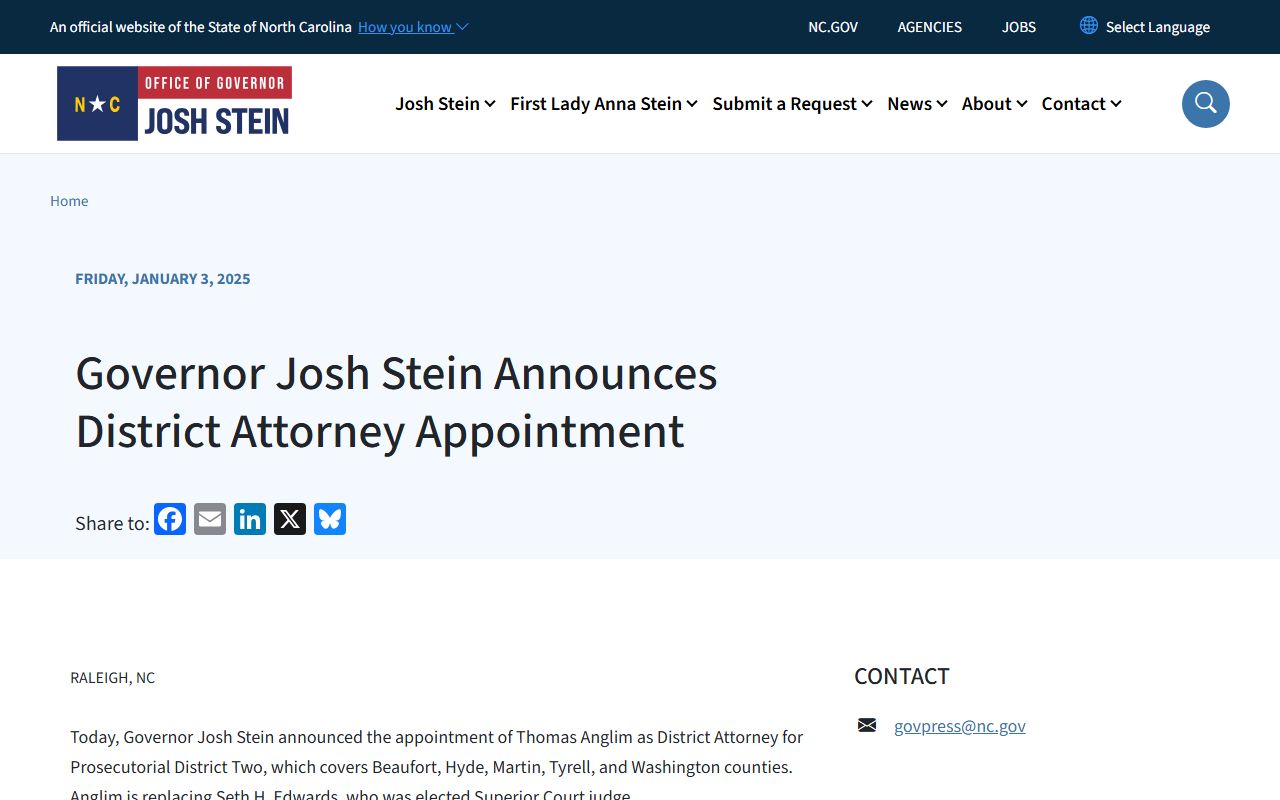
The DA role matters because state criminal prosecutions are brought in the name of North Carolina, not the victim personally.
Sealed vs Expunged Criminal Records
Sealing and expunction both limit public access, but they are not the same. A sealed record is restricted by court order or statute. An expunged record is removed or suppressed under an expunction order and the governing statute. The public search may show little or nothing after a valid expunction. The Clerk of Superior Court can provide forms, but court staff cannot tell a person whether a petition should be filed or how a judge will rule.
| Issue | Sealed | Expunged |
|---|---|---|
| Public View | Hidden or limited from public inspection. | Cleared from public record treatment under the order and statute. |
| Legal Source | Court order, rule, or specific confidentiality statute. | Expunction statutes such as dismissed-charge or eligible nonviolent conviction provisions. |
| Common Trigger | Sensitive record type, protected person, or sealed filing. | Eligible dismissal, not-guilty finding, or eligible conviction after statutory requirements. |
| Public Search Result | May show limited case information or no document access. | Should not disclose expunged entries in ordinary public checks. |
The statute for dismissed charges and not-guilty findings is an official expunction source.
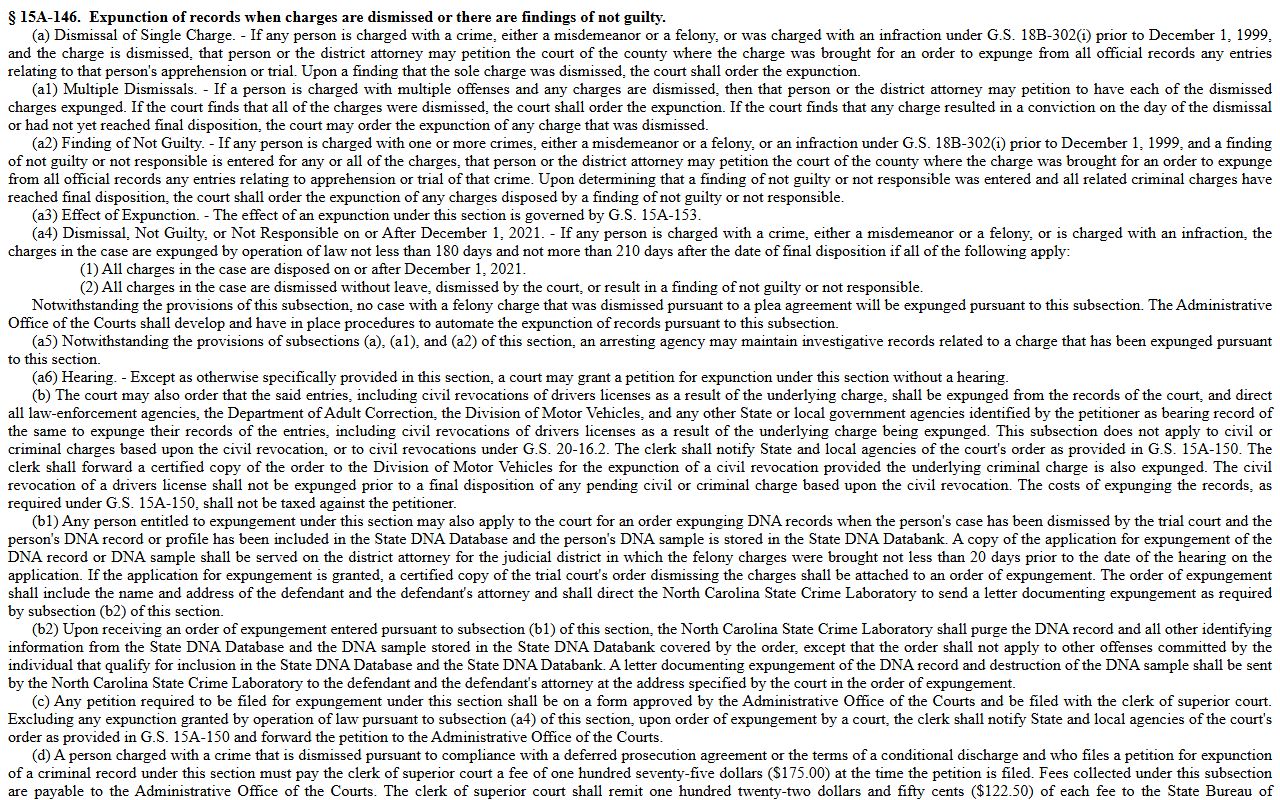
That source is useful when a dismissed Washington County charge still appears in a public-facing record.
Public Access to Washington County Criminal Records
Public access to Washington County criminal court records rests on clerk recordkeeping and public-record law, with major exceptions. G.S. 7A-109 requires the clerk to keep court records open to public inspection unless law prohibits access. G.S. 132-1 defines public records broadly, while G.S. 132-6.2 addresses copy fees and media charges.
Law-enforcement investigation records are different. G.S. 132-1.4 limits complete criminal investigation and intelligence files held by law enforcement. A court case may be public even when the full sheriff or police investigative file is not. Juvenile delinquency and undisciplined records are restricted under G.S. 7B-3000.
The nonviolent conviction expunction statute is another access limit for eligible criminal records.
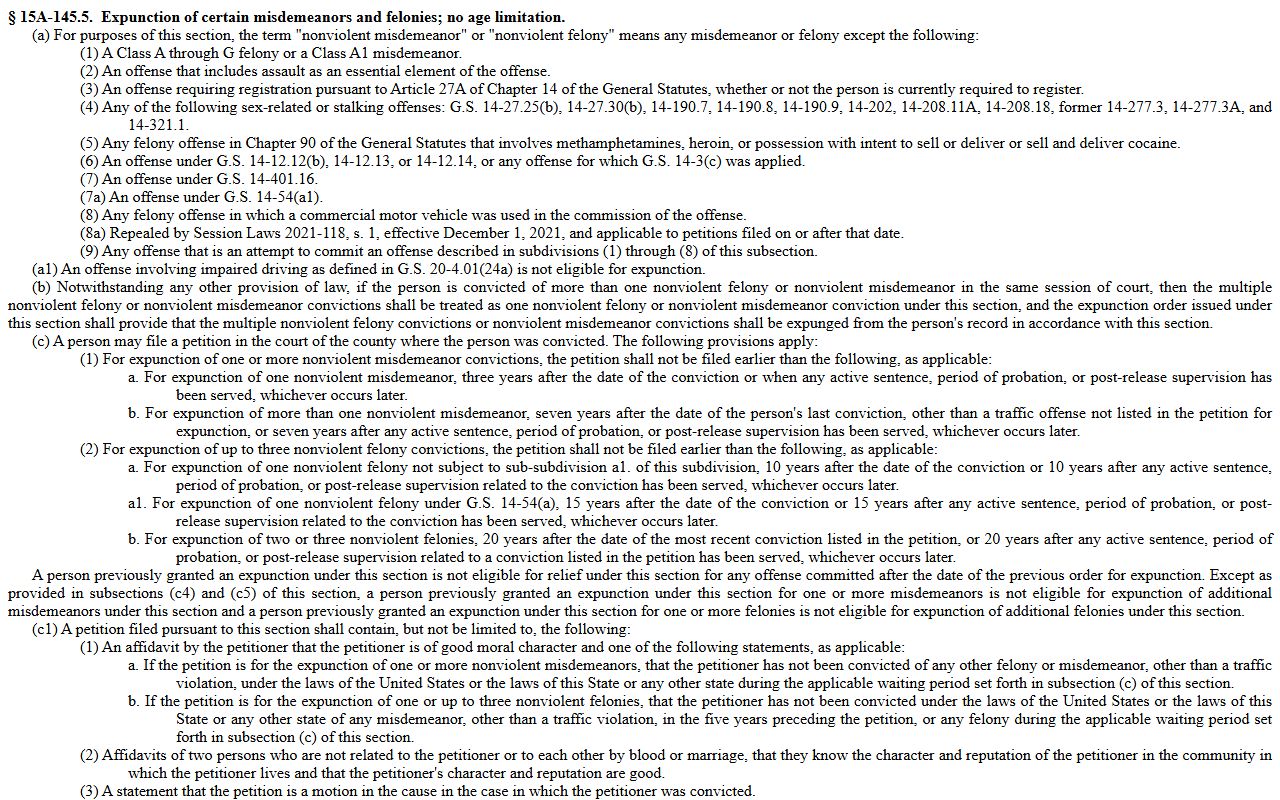
When an expunction order is granted, public court access should follow the order and the statute.
Washington County Defense Records Context
The public defender is relevant to criminal cases, bond, warrants, charges, and indigent-defense appointments, but the defender is not the records custodian. Washington County is in Defender District 2. NCIDS identifies Public Defender Laura Gibson, and the office serves Beaufort, Hyde, Martin, Tyrrell, and Washington counties. The Washington County FAQ lists the Public Defender Office phone as (252) 940-4014. Defense files and public court files are different records.
The statewide defender directory is an official source for Defender District 2 contacts.
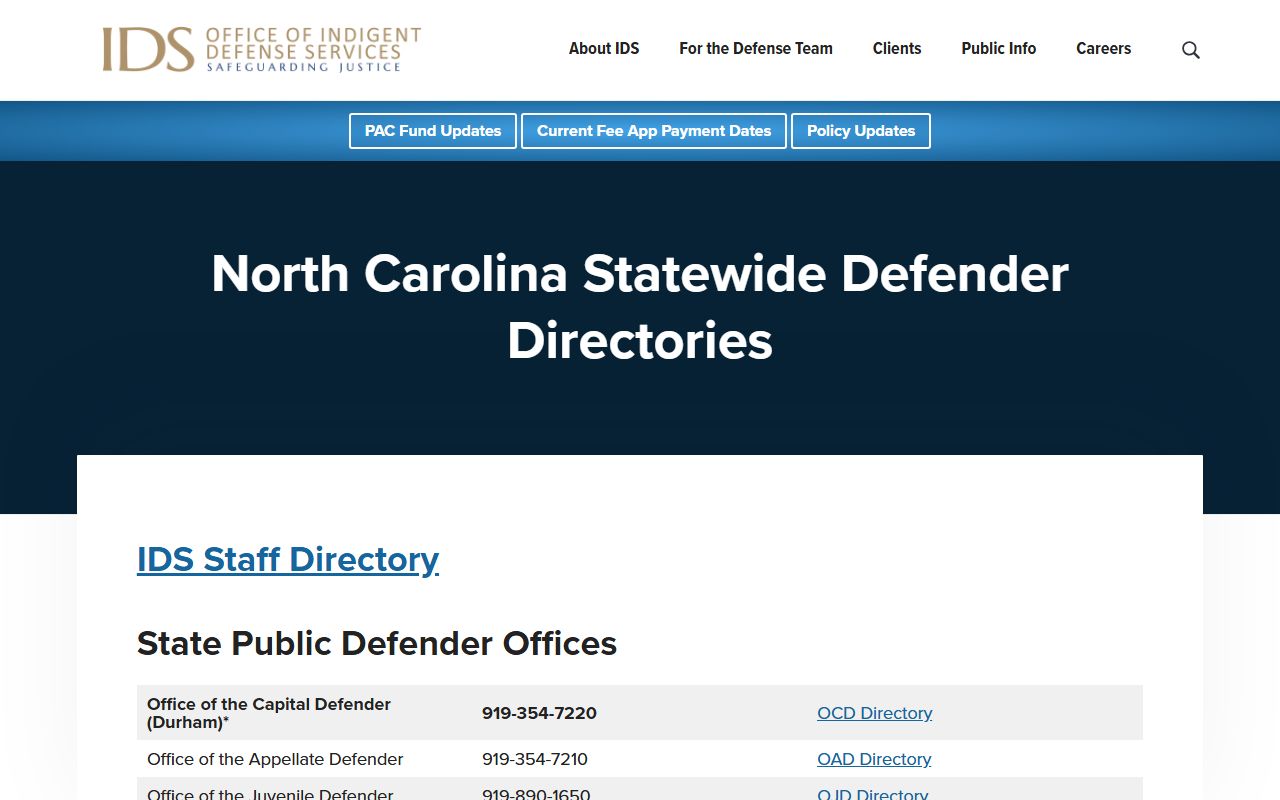
Use defender contacts for appointed-counsel questions, not for public copies of criminal court records.
Restricted Washington County Criminal Records
Restricted criminal records include juvenile matters, sealed filings, expunged charges or convictions, protected personal identifiers, mental health materials, and investigation records held by law enforcement. Adoption and certain guardianship-sensitive materials can also be confidential when they intersect with court files. A public record may be open in part and redacted in part.
The legal effect of expunction is addressed by statute.
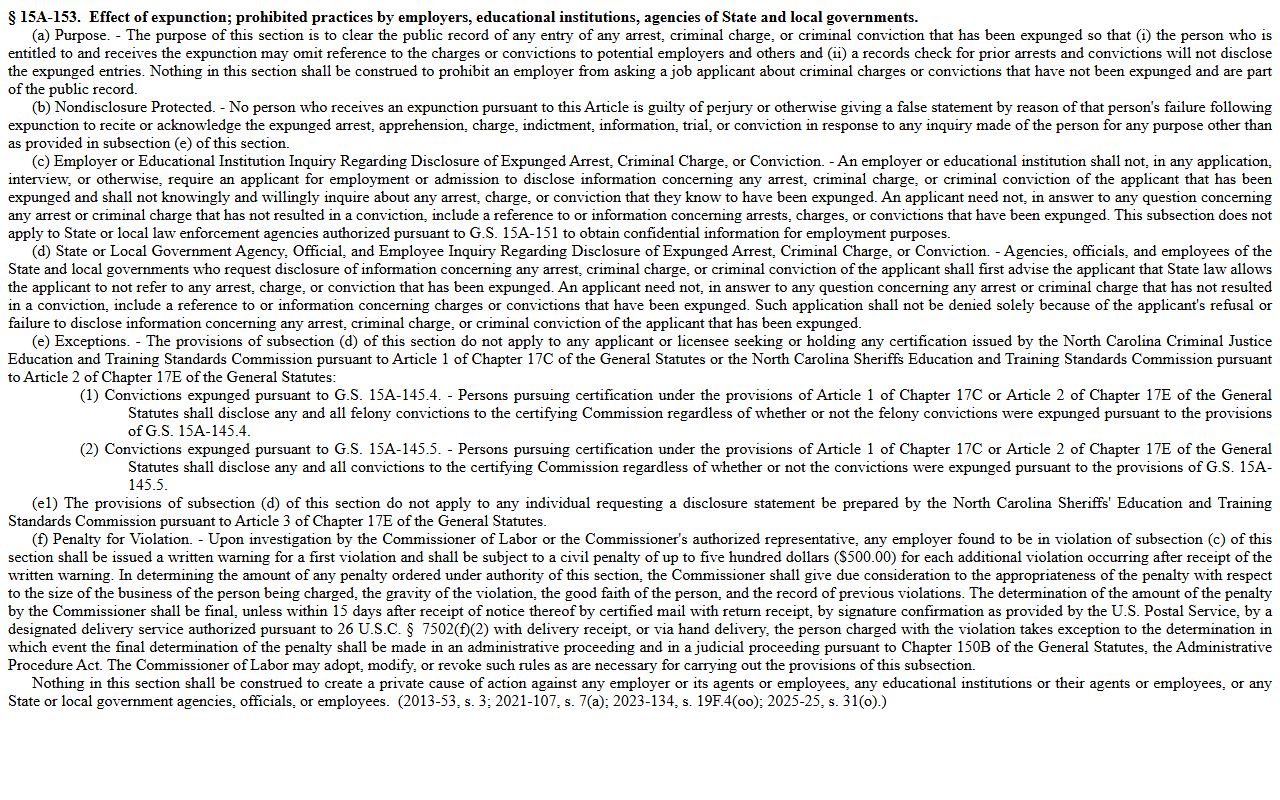
That distinction is why an older criminal court record may be absent from a public search even when the person remembers the case.
Note: The court file, jail custody record, and law-enforcement investigative file are separate records with different custodians.